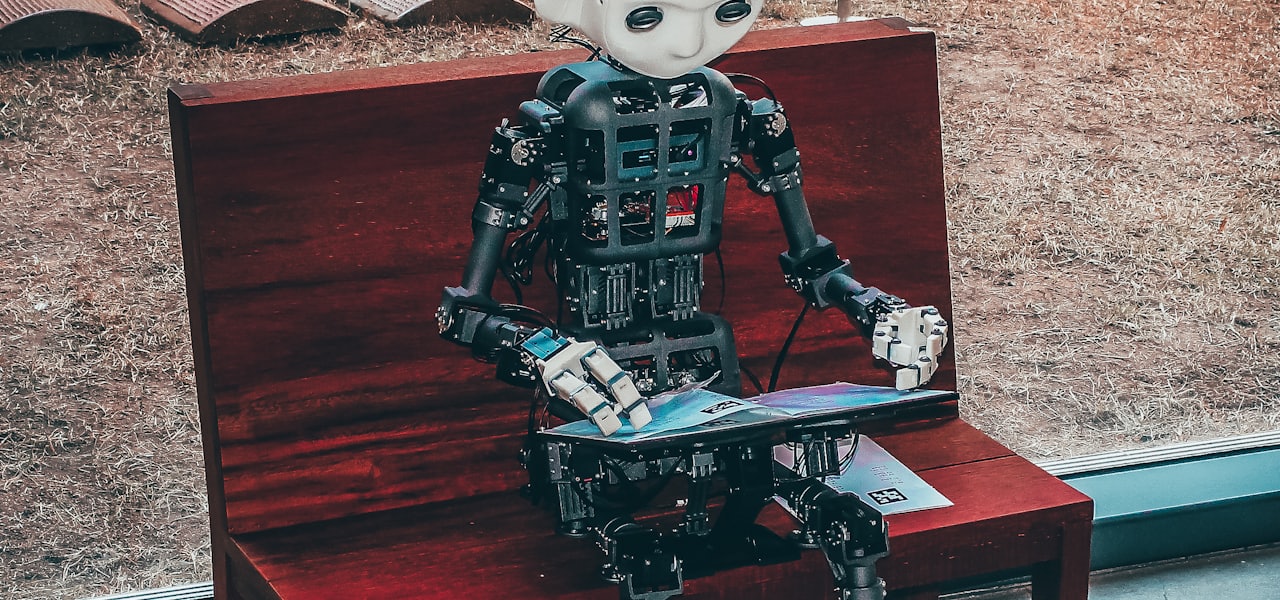
Algorithm curation is the selection of online media by technologies such as recommender systems and personalized search. Curation entails the selective sharing of online content and recommendations based on inferred interests. Curation algorithms implement different filter approaches, such as collaborative filtering and content-based filtering. Examples include search engine and social media products such as the Twitter feed, Facebook's News Feed, and Google Personalized Search. == History == === Early algorithmic curation === Online platforms use newsfeed algorithms to determine what content to present to each user. The volume of content published on social media platforms created a need for automated filtering, as manual review of all available content by users is not feasible. These systems function as a form of gatekeeper, shaping which new material users are exposed to and influencing knowledge, attention, and political exposure. ==== Information overload ==== Early ranking algorithms addressed information overload by surfacing the most recent or most popular posts. Later systems shifted toward ranking content based on predicted engagement, aiming to increase the time users spend on a platform. Research has found that these engagement-oriented systems can increase the spread of misinformation and contribute to political polarization as a side effect of optimising for user interaction. ==== How algorithm changes users' feeds over time ==== Algorithmic curation has been found to increase source diversity in some respects while simultaneously reducing the number of external links presented to users, which limits exposure to off-platform content. Research using agent-based modelling has examined how user behaviour, information quality, and algorithmic design interact with one another over time. === Emergence of AI === Platforms increasingly shifted from rule-based ranking systems toward machine-learning and AI-driven approaches, which allow feeds to be personalised at a larger scale and with greater responsiveness to user behaviour. For example, X (formerly Twitter) moved away from a chronological feed toward an AI-powered ranking system that personalises content for each user. These systems are capable of making ranking decisions across volumes of content and user interactions that would not be practical to handle manually. == Approach == === Filter types === ==== Collaborative filtering ==== Collaborative filtering (CF) methods create recommendations based on a person's usage patterns. CF predicts a person's preference for an item by matching their interests with those of users who have similar interests. This process allows for the sharing of ratings between users with similar profiles. CF is based on patterns of human behaviour rather than machine analysis of content itself. Users of CF systems rate items they have interacted with, and these ratings form a profile of interests. The CF system then matches that user with others who have similar profiles, and uses their ratings to generate recommendations. Collaborative filtering can be applied across various content types including text, images, music, and financial products, and can account for complex attributes such as taste and quality that are difficult to represent explicitly. ==== Content-based filtering ==== Content-based filtering (CBF) builds a user profile to represent the types of items a user has engaged with, based on keywords and attributes used to describe those items. Recommendations are generated by presenting items similar to those the user has previously engaged with or is currently viewing. The CBF method creates a profile for each item based on discrete attributes and features, and then constructs a content-based user profile using a weighted vector of those features derived from items the user has rated, purchased, or interacted with. The weights represent the relative importance of each feature, and can be computed using techniques such as Bayesian classifiers, cluster analysis, decision trees, and artificial neural networks, with the goal of estimating the probability that a user will engage with a suggested item. One application of content-based filtering is Pandora Radio, where users provide an artist, genre, or composer to generate a station, and the system surfaces music with similar attributes. == Technology == === Recommender system === Recommender systems rank and suggest content to users based on a combination of implicit and explicit user input. Implicit signals include time spent viewing or engaging with a specific item. Explicit signals include actions such as liking posts, saving store pages, reading news articles, or sharing content. === Personalized search === Personalized search aims to retrieve results most relevant to the user by incorporating contextual factors beyond the explicit query, such as past queries, browsing history, and inferred interests. Social media platforms such as X (formerly Twitter) and Bluesky generate recommendations based on similar users and the content those users interact with. Personalized search may also allow users to explicitly filter results by blocking content containing certain phrases or hashtags. For first-time users without prior history, personalized search may draw on content-based filtering to establish an initial context. Similar processes are used by search engines and retail platforms to tailor results and product recommendations to individual users. == AI contribution == Artificial intelligence contributes to algorithmic curation through machine-learning models capable of processing large volumes of data. Techniques such as deep learning and reinforcement learning allow curation algorithms to model user preferences with greater granularity alongside established filtering approaches. This enables platforms to adjust content rankings rapidly in response to user behaviour. In social media and streaming contexts, AI-driven systems arrange feeds according to predicted relevance, with the outputs shaped by patterns present in the training data. == Social media and potential impact == === Echo chambers === Social media algorithms, such as those used by X (formerly Twitter), recommend content that the system predicts a user will engage with positively. Content from accounts with differing perspectives is less likely to be surfaced, which may reduce source and topic diversity and contribute to the formation of echo chambers. For example, Facebook's news feed is designed to surface content aligned with users' prior engagement, which may reinforce existing views. This dynamic may contribute to filter bubbles, in which users are seldom exposed to content outside their existing interests. Users may further narrow their feeds by actively blocking certain content or accounts. === Over-representation === A pattern observed across social media platforms is the concentration of algorithmic visibility among a small subset of users. Content from the most active users, those with the largest followings, or those generating the most engagement tends to be surfaced more frequently, meaning a small number of accounts can account for a disproportionate share of what appears in other users' feeds.
Autoscaling
Autoscaling, (also written as auto scaling, auto-scaling, or known as automatic scaling), is a method used in cloud computing that dynamically adjusts the amount of computational resources in a server farm - typically measured by the number of active servers - automatically based on the load on the farm. For example, the number of servers running behind a web application may be increased or decreased automatically based on the number of active users on the site. Since such metrics may change dramatically throughout the course of the day, and servers are a limited resource that cost money to run even while idle, there is often an incentive to run "just enough" servers to support the current load while still being able to support sudden and large spikes in activity. Autoscaling is helpful for such needs, as it can reduce the number of active servers when activity is low, and launch new servers when activity is high. Autoscaling is closely related to, and builds upon, the idea of load balancing. == Advantages == Autoscaling offers the following advantages: For companies running their own web server infrastructure, autoscaling typically means allowing some servers to go to sleep during times of low load, saving on electricity costs (as well as water costs if water is being used to cool the machines). For companies using infrastructure hosted in the cloud, autoscaling can mean lower bills, because most cloud providers charge based on total usage rather than maximum capacity. Even for companies that cannot reduce the total compute capacity they run or pay for at any given time, autoscaling can help by allowing the company to run less time-sensitive workloads on machines that get freed up by autoscaling during times of low traffic. Autoscaling solutions, such as the one offered by Amazon Web Services, can also take care of replacing unhealthy instances and therefore protecting somewhat against hardware, network, and application failures. Autoscaling can offer greater uptime and more availability in cases where production workloads are variable and unpredictable. Autoscaling differs from having a fixed daily, weekly, or yearly cycle of server use in that it is responsive to actual usage patterns, and thus reduces the potential downside of having too few or too many servers for the traffic load. For instance, if traffic is usually lower at midnight, then a static scaling solution might schedule some servers to sleep at night, but this might result in downtime on a night where people happen to use the Internet more (for instance, due to a viral news event). Autoscaling, on the other hand, can handle unexpected traffic spikes better. == Terminology == In the list below, we use the terminology used by Amazon Web Services (AWS). However, alternative names are noted and terminology that is specific to the names of Amazon services is not used for the names. == Practice == === Amazon Web Services (AWS) === Amazon Web Services launched the Amazon Elastic Compute Cloud (EC2) service in August 2006, that allowed developers to programmatically create and terminate instances (machines). At the time of initial launch, AWS did not offer autoscaling, but the ability to programmatically create and terminate instances gave developers the flexibility to write their own code for autoscaling. Third-party autoscaling software for AWS began appearing around April 2008. These included tools by Scalr and RightScale. RightScale was used by Animoto, which was able to handle Facebook traffic by adopting autoscaling. On May 18, 2009, Amazon launched its own autoscaling feature along with Elastic Load Balancing, as part of Amazon Elastic Compute Cloud. Autoscaling is now an integral component of Amazon's EC2 offering. Autoscaling on Amazon Web Services is done through a web browser or the command line tool. In May 2016 Autoscaling was also offered in AWS ECS Service. On-demand video provider Netflix documented their use of autoscaling with Amazon Web Services to meet their highly variable consumer needs. They found that aggressive scaling up and delayed and cautious scaling down served their goals of uptime and responsiveness best. In an article for TechCrunch, Zev Laderman, the co-founder and CEO of Newvem, a service that helps optimize AWS cloud infrastructure, recommended that startups use autoscaling in order to keep their Amazon Web Services costs low. Various best practice guides for AWS use suggest using its autoscaling feature even in cases where the load is not variable. That is because autoscaling offers two other advantages: automatic replacement of any instances that become unhealthy for any reason (such as hardware failure, network failure, or application error), and automatic replacement of spot instances that get interrupted for price or capacity reasons, making it more feasible to use spot instances for production purposes. Netflix's internal best practices require every instance to be in an autoscaling group, and its conformity monkey terminates any instance not in an autoscaling group in order to enforce this best practice. === Microsoft's Windows Azure === On June 27, 2013, Microsoft announced that it was adding autoscaling support to its Windows Azure cloud computing platform. Documentation for the feature is available on the Microsoft Developer Network. === Oracle Cloud === Oracle Cloud Platform allows server instances to automatically scale a cluster in or out by defining an auto-scaling rule. These rules are based on CPU and/or memory utilization and determine when to add or remove nodes. === Google Cloud Platform === On November 17, 2014, the Google Compute Engine announced a public beta of its autoscaling feature for use in Google Cloud Platform applications. As of March 2015, the autoscaling tool is still in Beta. === Facebook === In a blog post in August 2014, a Facebook engineer disclosed that the company had started using autoscaling to bring down its energy costs. The blog post reported a 27% decline in energy use for low traffic hours (around midnight) and a 10-15% decline in energy use over the typical 24-hour cycle. === Kubernetes Horizontal Pod Autoscaler === Kubernetes Horizontal Pod Autoscaler automatically scales the number of pods in a replication controller, deployment or replicaset based on observed CPU utilization (or, with beta support, on some other, application-provided metrics) == Alternative autoscaling decision approaches == Autoscaling by default uses reactive decision approach for dealing with traffic scaling: scaling only happens in response to real-time changes in metrics. In some cases, particularly when the changes occur very quickly, this reactive approach to scaling is insufficient. Two other kinds of autoscaling decision approaches are described below. === Scheduled autoscaling approach === This is an approach to autoscaling where changes are made to the minimum size, maximum size, or desired capacity of the autoscaling group at specific times of day. Scheduled scaling is useful, for instance, if there is a known traffic load increase or decrease at specific times of the day, but the change is too sudden for reactive approach based autoscaling to respond fast enough. AWS autoscaling groups support scheduled scaling. === Predictive autoscaling === This approach to autoscaling uses predictive analytics. The idea is to combine recent usage trends with historical usage data as well as other kinds of data to predict usage in the future, and autoscale based on these predictions. For parts of their infrastructure and specific workloads, Netflix found that Scryer, their predictive analytics engine, gave better results than Amazon's reactive autoscaling approach. In particular, it was better for: Identifying huge spikes in demand in the near future and getting capacity ready a little in advance Dealing with large-scale outages, such as failure of entire availability zones and regions Dealing with variable traffic patterns, providing more flexibility on the rate of scaling out or in based on the typical level and rate of change in demand at various times of day On November 20, 2018, AWS announced that predictive scaling would be available as part of its autoscaling offering.
Ilastik
ilastik is free open source software for image classification and segmentation. No previous experience in image processing is required to run the software. Since 2018 ilastik is further developed and maintained by Anna Kreshuk's group at European Molecular Biology Laboratory. == Features == ilastik allows user to annotate an arbitrary number of classes in images with a mouse interface. Using these user annotations and the generic (nonlinear) image features, the user can train a random forest classifier. Trained ilastik classifiers can be applied new data not included in the training set in ilastik via its batch processing functionality, or without using the graphical user interface, in headless mode. ilastik can be integrated into various related tools: Pre-trained workflows can be executed directly from ImageJ/Fiji using the ilastik-ImageJ plugin. Pre-trained ilastik Pixel Classification workflows can be run directly in Python with the ilastik Python package, which is available via conda. ilastik has a CellProfiler module to use ilastik classifiers to process images within a CellProfiler framework. == History == ilastik was first released in 2011 by scientists at the Heidelberg Collaboratory for Image Processing (HCI), University of Heidelberg. == Application == The Interactive Learning and Segmentation Toolkit Carving Cell classification and neuron classification Synapse detection Cell tracking Neural Network Classification == Resources == ilastik project is hosted on GitHub. It is a collaborative project, any contributions such as comments, bug reports, bug fixes or code contributions are welcome. The ilastik team can be contacted for user support on the image.sc forum.
Soft independent modelling of class analogies
Soft independent modelling by class analogy (SIMCA) is a statistical method for supervised classification of data. The method requires a training data set consisting of samples (or objects) with a set of attributes and their class membership. The term soft refers to the fact the classifier can identify samples as belonging to multiple classes and not necessarily producing a classification of samples into non-overlapping classes. == Method == In order to build the classification models, the samples belonging to each class need to be analysed using principal component analysis (PCA); only the significant components are retained. For a given class, the resulting model then describes either a line (for one Principal Component or PC), plane (for two PCs) or hyper-plane (for more than two PCs). For each modelled class, the mean orthogonal distance of training data samples from the line, plane, or hyper-plane (calculated as the residual standard deviation) is used to determine a critical distance for classification. This critical distance is based on the F-distribution and is usually calculated using 95% or 99% confidence intervals. New observations are projected into each PC model and the residual distances calculated. An observation is assigned to the model class when its residual distance from the model is below the statistical limit for the class. The observation may be found to belong to multiple classes and a measure of goodness of the model can be found from the number of cases where the observations are classified into multiple classes. The classification efficiency is usually indicated by Receiver operating characteristics. In the original SIMCA method, the ends of the hyper-plane of each class are closed off by setting statistical control limits along the retained principal components axes (i.e., score value between plus and minus 0.5 times score standard deviation). More recent adaptations of the SIMCA method close off the hyper-plane by construction of ellipsoids (e.g. Hotelling's T2 or Mahalanobis distance). With such modified SIMCA methods, classification of an object requires both that its orthogonal distance from the model and its projection within the model (i.e. score value within the region defined by the ellipsoid) are not significant. == Application == SIMCA as a method of classification has gained widespread use especially in applied statistical fields such as chemometrics and spectroscopic data analysis.
PVLV
The primary value learned value (PVLV) model is a possible explanation for the reward-predictive firing properties of dopamine (DA) neurons. It simulates behavioral and neural data on Pavlovian conditioning and the midbrain dopaminergic neurons that fire in proportion to unexpected rewards. It is an alternative to the temporal-differences (TD) algorithm. It is used as part of Leabra.
Stride (software)
Stride was a cloud-based team business communication and collaboration tool, launched by Atlassian on 7 September 2017 to replace the cloud-based version of HipChat. Stride software was available to download onto computers running Windows, Mac or Linux, as well as Android, iOS smartphones, and tablets. Stride was bought by Atlassian's competitor Slack Technologies and was discontinued on February 15, 2019. The features of Stride include chat rooms, one-on-one messaging, file sharing, 5 GB of file storage, group voice and video calling, built-in collaboration tools, and up to 25,000 of searchable message history. Premium features include unlimited file storage, users, group chat rooms, file sharing and storage, apps, and history retention. The premium version, priced at $3/user/month, also includes advanced meeting functionality like group screen sharing, remote desktop control, and dial-in/dial-out capabilities. Stride offered integrations with Atlassian's other products as well as other third-party applications listed in the Atlassian Marketplace, such as GitHub, Giphy, Stand-Bot and Google Calendar. Stride offered additional features beyond messaging to improve efficiency and productivity. It aimed to reduce collaboration noise by introducing a "focus" mode, and eliminates the divisions between text chat, voice meetings, and videoconferencing, by simplifying transitioning between these modes in the same channel. On July 26, 2018, Atlassian announced that HipChat and Stride would be discontinued February 15, 2019, and that it had reached a deal to sell their intellectual property to Slack. Slack paid an undisclosed amount over three years to assume the user bases of the services, while Atlassian took a minority investment in Slack. The companies also announced a commitment to work on integration of Slack with Atlassian services.
GNU Octave
GNU Octave is a scientific programming language for scientific computing and numerical computation. Among other things, Octave can be used to solve linear and nonlinear problems numerically and to perform other numerical experiments using a language that is mostly compatible with MATLAB. It may also be used as a batch-oriented language. As part of the GNU Project, it is free software under the terms of the GNU General Public License. == History == The project was conceived around 1988. At first it was intended to be a companion to a chemical reactor design course. Full development was started by John W. Eaton in 1992. The first alpha release dates back to 4 January 1993 and on 17 February 1994 version 1.0 was released. Version 9.2.0 was released on 7 June 2024. The program is named after Octave Levenspiel, a former professor of the principal author. Levenspiel was known for his ability to perform quick back-of-the-envelope calculations. == Development history == == Developments == In addition to use on desktops for personal scientific computing, Octave is used in academia and industry. For example, Octave was used on a massive parallel computer at Pittsburgh Supercomputing Center to find vulnerabilities related to guessing social security numbers. Acceleration with OpenCL or CUDA is also possible with use of GPUs. == Technical details == Octave is written in C++ using the C++ standard library. Octave uses an interpreter to execute the Octave scripting language. Octave is extensible using dynamically loadable modules. Octave interpreter has an OpenGL-based graphics engine to create plots, graphs and charts and to save or print them. Alternatively, gnuplot can be used for the same purpose. Octave includes a graphical user interface (GUI) in addition to the traditional command-line interface (CLI); see #User interfaces for details. == Octave, the language == The Octave language is an interpreted programming language. It is a structured programming language (similar to C) and supports many common C standard library functions, and also certain UNIX system calls and functions. However, it does not support passing arguments by reference although function arguments are copy-on-write to avoid unnecessary duplication. Octave programs consist of a list of function calls or a script. The syntax is matrix-based and provides various functions for matrix operations. It supports various data structures and allows object-oriented programming. Its syntax is very similar to MATLAB, and careful programming of a script will allow it to run on both Octave and MATLAB. Because Octave is made available under the GNU General Public License, it may be freely changed, copied and used. The program runs on Microsoft Windows and most Unix and Unix-like operating systems, including Linux, Android, and macOS. == Notable features == === Command and variable name completion === Typing a TAB character on the command line causes Octave to attempt to complete variable, function, and file names (similar to Bash's tab completion). Octave uses the text before the cursor as the initial portion of the name to complete. === Command history === When running interactively, Octave saves the commands typed in an internal buffer so that they can be recalled and edited. === Data structures === Octave includes a limited amount of support for organizing data in structures. In this example, we see a structure x with elements a, b, and c, (an integer, an array, and a string, respectively): === Short-circuit Boolean operators === Octave's && and || logical operators are evaluated in a short-circuit fashion (like the corresponding operators in the C language), in contrast to the element-by-element operators & and |. === Increment and decrement operators === Octave includes the C-like increment and decrement operators ++ and -- in both their prefix and postfix forms. Octave also does augmented assignment, e.g. x += 5. === Unwind-protect === Octave supports a limited form of exception handling modelled after the unwind_protect of Lisp. The general form of an unwind_protect block looks like this: As a general rule, GNU Octave recognizes as termination of a given block either the keyword end (which is compatible with the MATLAB language) or a more specific keyword endblock or, in some cases, end_block. As a consequence, an unwind_protect block can be terminated either with the keyword end_unwind_protect as in the example, or with the more portable keyword end. The cleanup part of the block is always executed. In case an exception is raised by the body part, cleanup is executed immediately before propagating the exception outside the block unwind_protect. GNU Octave also supports another form of exception handling (compatible with the MATLAB language): This latter form differs from an unwind_protect block in two ways. First, exception_handling is only executed when an exception is raised by body. Second, after the execution of exception_handling the exception is not propagated outside the block (unless a rethrow( lasterror ) statement is explicitly inserted within the exception_handling code). === Variable-length argument lists === Octave has a mechanism for handling functions that take an unspecified number of arguments without explicit upper limit. To specify a list of zero or more arguments, use the special argument varargin as the last (or only) argument in the list. varargin is a cell array containing all the input arguments. === Variable-length return lists === A function can be set up to return any number of values by using the special return value varargout. For example: === C++ integration === It is also possible to execute Octave code directly in a C++ program. For example, here is a code snippet for calling rand([10,1]): C and C++ code can be integrated into GNU Octave by creating oct files, or using the MATLAB compatible MEX files. == MATLAB compatibility == Octave has been built with MATLAB compatibility in mind, and shares many features with MATLAB: % Script: myscript.m a = 5; b = a 2 % Function: myfunc.m function result = myfunc(x) result = x^2 + 3; end Matrices as fundamental data type. Built-in support for complex numbers. Powerful built-in math functions and extensive function libraries. Extensibility in the form of user-defined functions. Octave treats incompatibility with MATLAB as a bug; therefore, it could be considered a software clone, which does not infringe software copyright as per Lotus v. Borland court case. MATLAB scripts from the MathWorks' FileExchange repository in principle are compatible with Octave. However, while they are often provided and uploaded by users under an Octave compatible and proper open source BSD license, the FileExchange Terms of use prohibit any usage beside MathWorks' proprietary MATLAB. === Syntax compatibility === There are a few purposeful, albeit minor, syntax additions Archived 2012-04-26 at the Wayback Machine: Comment lines can be prefixed with the # character as well as the % character; Various C-based operators ++, --, +=, =, /= are supported; Elements can be referenced without creating a new variable by cascaded indexing, e.g. [1:10](3); Strings can be defined with the double-quote " character as well as the single-quote ' character; When the variable type is single (a single-precision floating-point number), Octave calculates the "mean" in the single-domain (MATLAB in double-domain) which is faster but gives less accurate results; Blocks can also be terminated with more specific Control structure keywords, i.e., endif, endfor, endwhile, etc.; Functions can be defined within scripts and at the Octave prompt; Presence of a do-until loop (similar to do-while in C). === Function compatibility === Many, but not all, of the numerous MATLAB functions are available in GNU Octave, some of them accessible through packages in Octave Forge. The functions available as part of either core Octave or Forge packages are listed online Archived 2024-03-14 at the Wayback Machine. A list of unavailable functions is included in the Octave function __unimplemented.m__. Unimplemented functions are also listed under many Octave Forge packages in the Octave Wiki. When an unimplemented function is called the following error message is shown: == User interfaces == Octave comes with an official graphical user interface (GUI) and an integrated development environment (IDE) based on Qt. It has been available since Octave 3.8, and has become the default interface (over the command-line interface) with the release of Octave 4.0. It was well-received by an EDN contributor, who wrote "[Octave] now has a very workable GUI" in reviewing the then-new GUI in 2014. Several 3rd-party graphical front-ends have also been developed, like ToolboX for coding education. == GUI applications == With Octave code, the user can create GUI applications. See GUI Development (GNU Octave (version 7.1.0)). Below are some examples: Button, edit control, checkboxTextboxListbox wit